Ambleside Schools International Articles
Browse more Ambleside Schools International Resources.
Cultivating Curiosity, the Hallmark of a Lifelong Learner
How to Encourage a Love of Learning Through Ages and Stages
Curiosity is a buzzword in Charlotte Mason education.
It’s not that we teach curiosity to our students – Charlotte Mason believed that curiosity is an innate desire for knowledge that every child possesses from birth. The responsibility that we as teachers and parents carry is that of developing a child’s curiosity. It is not something we can impart to them; it is a desire they already possess that we can and should direct.
Like all hunger, it can be satiated with either a heavy portion of sweets, or with a balanced, nutritious meal. Healthy curiosity must be cultivated, or else the hunger for knowledge will eventually die off altogether and reject the hard work of real thinking.
Poorly directed curiosity can become inward-focused, creating children who are self-absorbed, self-inflated, and self-interested. Healthy curiosity, on the other hand, ends in magnanimity – an ability to empathize with others, and to act sacrificially for the good of the whole.
Healthy curiosity draws us outside of ourselves and awakens us to the fact that there is a “special work” set aside for each one of us. It becomes a God-Hunger that yearns to know Him and understand one’s place within the divine plan.
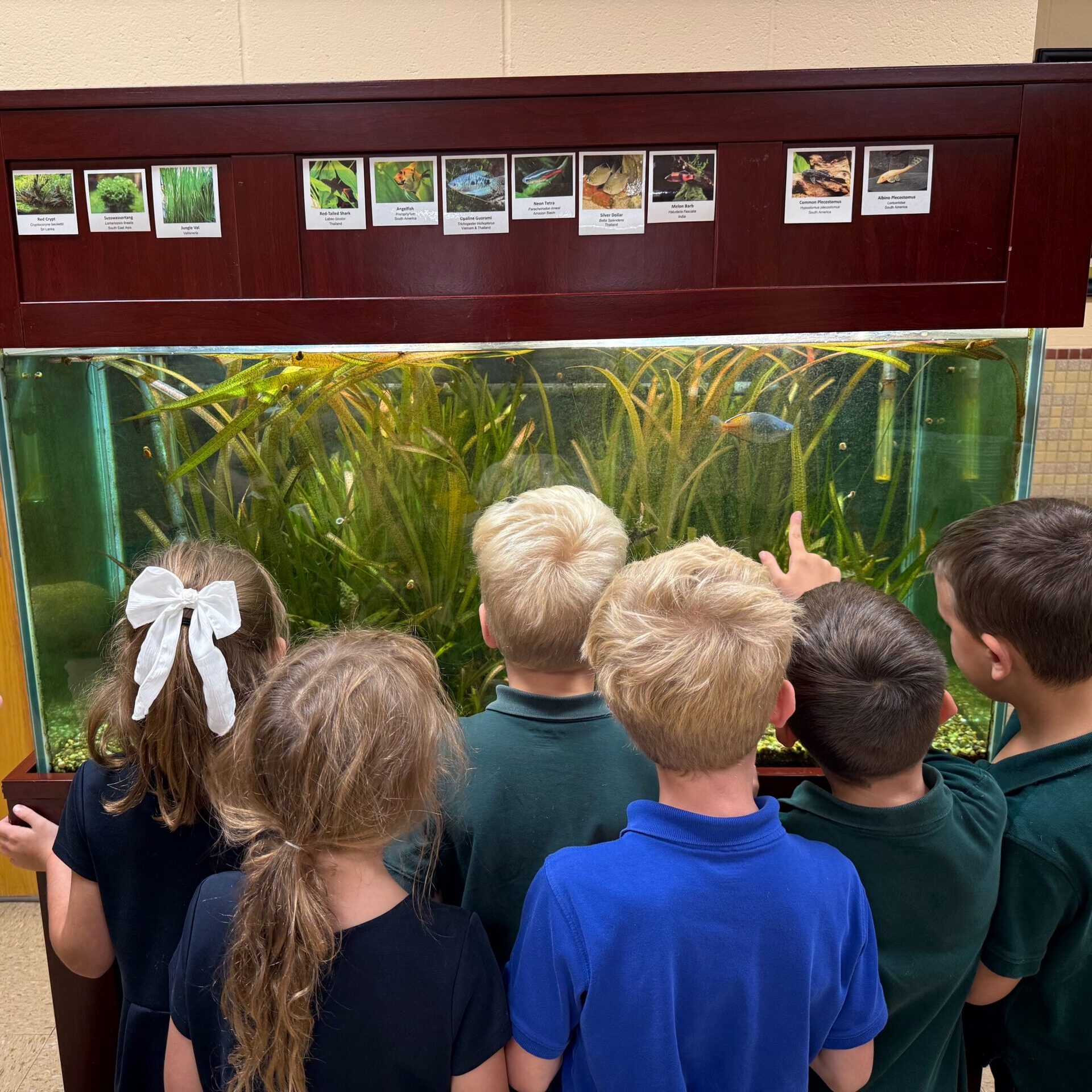
When we direct their natural hunger for knowledge toward quality materials and take the questions they ask seriously, we are guiding their curiosity toward a lifelong love for learning by affirming the knowledge-seeking process, which engenders more of the same behavior.
Cultivating Curiosity in Pre-K Learners
Parents can begin fostering curiosity in their homes before their children are ever enrolled in a school program by setting aside time to be outside together. Children are naturally curious, and without a device to distract them, they will naturally attune to the wonders of the world that they encounter as you explore together.
Pay close attention and let your child lead. When they shout with joy because they see a frog sitting on the side of a curb, don’t walk past it. Pause and ask a lot of questions. Watch as animals dive into their holes and burrows, build nests, lay eggs and nurture new life. Write down your child’s questions each time you visit, and take time to read their questions back to them.
Cultivating Curiosity in Elementary Students
As students progress into their early elementary years, you can expand this practice by sending them on scouting missions at natural areas or parks.
Set parameters for their mission, saying things like, “Do you see this Mexican Sycamore and that Pecan tree? Do you see all the plants between them and the space where the ravine drops down to the creek? Take five minutes and go explore in that area. Make as many observations as you can and then bring one specimen back to me that you are curious to learn more about.”
When they come back with their curiosity specimens, ask lots of questions. Encourage your older elementary students to write down their questions and observations and to draw a picture of their specimen.
When you are done scouting for the day, pay a visit to the encyclopedia section in your local library to see if your children can find answers to any of their questions, or invest in a stack of bird, mammal, tree, flower, and insect guides for them to consult.
Cultivating Curiosity in Pre-Teens
As children mature into their early teen years, they become naturally curious to know more about their friends, family members, and teachers. At the same time, their imagination strengthens as they yearn to know what lies in the future: they are full of questions about where they will live one day, what their impact will be in the world, and who will be a love worthy of their forever promises.
Pay attention. Notice how much of your child’s dialogue each day is centered around themselves. Notice the tone they use when they talk about friends and acquaintances. Can they say something nice about the person in class with whom they have little in common? Are they curious to find the good in others, or are they quick to make judgments?
Pay attention and ask lots of questions. “If your friend were here right now, would they appreciate you telling that story?” Regardless of your child’s initial response, you have laid the seed for them to ask themselves these same questions later when they are alone with their thoughts.
Cultivating Curiosity in Young Adults
As teens enter into high school, they have a sense that the world they have known is small and the gates to a wider world are about to open wide for their exploration.
In her book, A Place to Belong, Amber O’Neal Johnston discusses the need to make sure that we build our family homes with both mirrors and windows. Through their early years, your child has likely encountered many storybooks that are mirrors to their own lives: the children in the stories they read look like them and the heroes are people living out principles that you hope your child will one day embody.
Johnston suggests that living libraries need to include both stories that are mirrors, and stories that are windows – stories that provide the opportunity to gaze out into the world from within the safety of the home. These stories portray people who look and think differently from us and live in ways we might not consider best for our own families. These windows are especially important in the teen years. Let your soon-to-be-adult read, but pay attention and ask lots of questions.
While Charlotte Mason acknowledges the reasonable desire to protect our young people from harmful knowledge and people of bad character, she also acknowledges that young people are more likely to seek out bad companions if they are given no point of reference for the things of the world. If you will not share your experiences, they will seek out and revere bad companions who are full of worldly experiences and are eager to share what they have learned.
In Pride and Prejudice, Wickham and Kitty are important characters for your teen to meet as much as Darcy and Elizabeth.
The goal in all of this is that we are providing substantive materials and making room for students to observe, discover, ask questions, answer questions, and share in the joy of communal learning that is theirs to experience in all its fullness.
Monica Sutton
Principal
Ambleside School of Fredericksburg