Ambleside Schools International Articles
Browse more Ambleside Schools International Resources.
Cultivating Independence and Self-Discipline in Children
When a child struggles with a math problem or grapples with a challenging assignment, every adult must decide whether to intervene or not. Do I step in or step back?
Our society is filled with opportunities to observe how adults answer this question, and it’s common to see approaches on both ends of the spectrum. At one end of the spectrum is “helicopter parenting,” where adults are ready to rescue their children from every struggle. At the other end is neglect, leading to trauma.
What is the right balance? Charlotte Mason would say, “It depends on the child.”
The concept of “masterly inactivity” practiced in Ambleside classrooms is an art that helps teachers navigate this question dozens of times a day. Because it’s an approach both paradoxical and countercultural, it requires some exploration as to how it can be applied well in the classroom and at home.
What It Isn’t
In many classrooms today, you will often see teachers working hard to keep children’s attention. Much depends on the use of voice, personality, and shiny objects to talk children through each and every step of learning.
So the student learns to become dependent on the teacher. We tell them the answers to the questions that we decided ahead of time are important for them to know. We teach them that we’re going to do the work, digest the material for them, and then basically spit in their mouths like a baby bird, if you will, and tell them to spit it back to us on a test.
Students are not required to engage with the learning process, and thus, classrooms are full of apathetic students.
The teacher’s motives to keep them moving forward are good, but the methods can have a counterproductive effect. This approach actually tears down a child’s self-confidence in many ways because they never learn to do the work themselves.
This is the end of the spectrum where we’re intervening too much, to the point that children are crippled to do any thinking for themselves. Yet on the other end of that spectrum, it’s possible to intervene too little, leaving children in despair and loneliness that leads to trauma.
What It Is
The art of “masterful inactivity” is the balanced approach between the two extremes that you will observe in an Ambleside classroom. This supportive role builds a bridge from the student to the text and provides the scaffolding needed to help the student engage with the text themselves.
This requires keen observation, knowledge of each individual child, and awareness of how the child is growing. The teacher is coming alongside each student and helping them continue to grow. They are not quick to rescue. They know when to guide and direct, and when to pull back.
Contrary to what the terminology might convey, there is nothing inactive about it. The teacher stays intensely aware, actively processing what each child needs, but controlling their own actions to avoid overdoing. They’re not afraid to let children struggle, understanding that’s where growth happens. The key is knowing the difference between productive struggle and despair.
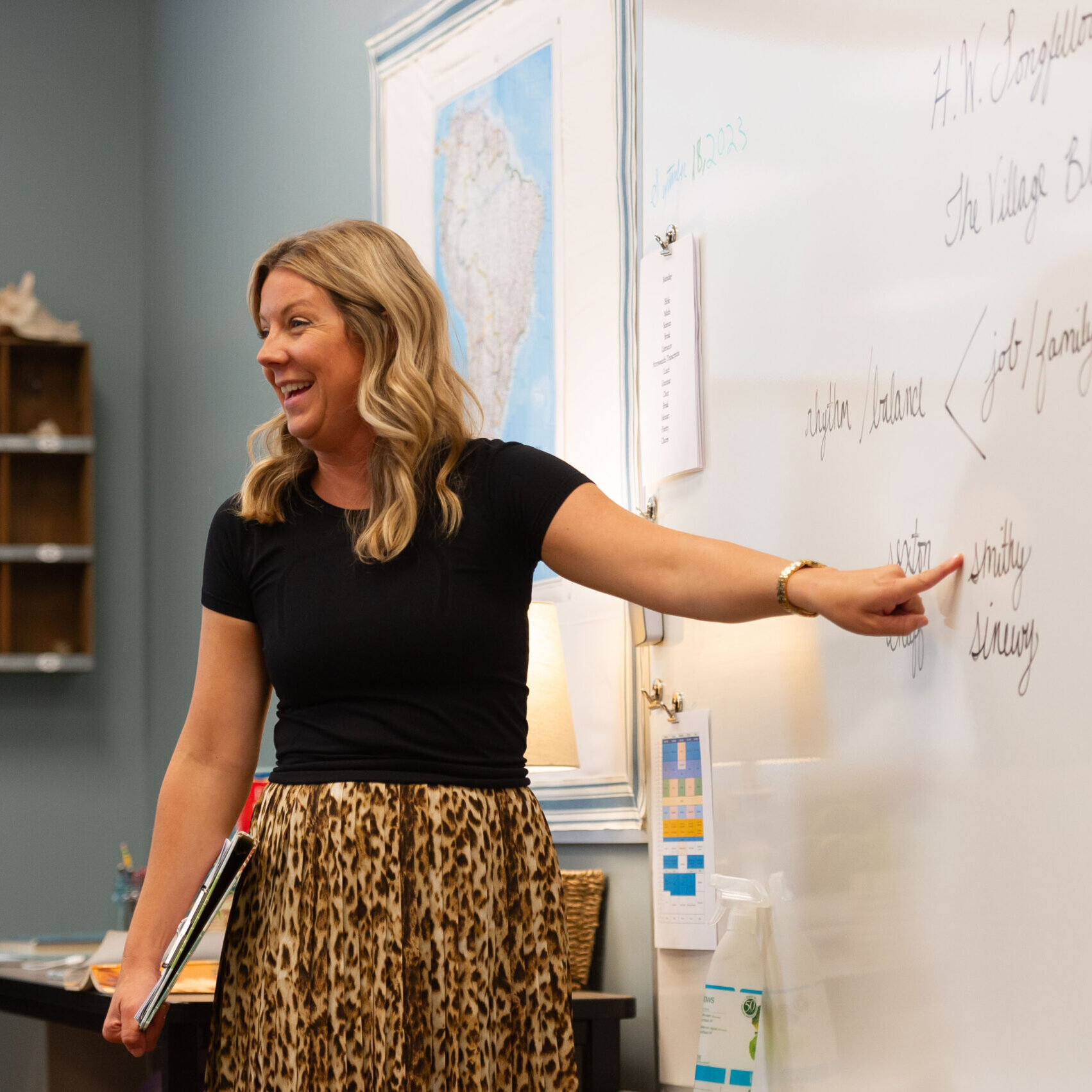
A brand new parent observing a classroom might assume the teacher is not doing very much, but it’s important to understand the true role of a teacher: to position themselves as a bridge and a support so the students learn to do the work themselves.
In Practice
Consider a phonics lesson. One teacher talks through every phonogram card, every rule, every word — focused entirely on the lesson plan. Another teacher watches the learners. When she sees that students know the material, her voice disappears. The students carry it forward themselves. She remains acutely aware, noticing when individual students need support, but she doesn’t insert herself unnecessarily.
Or picture a high school literature class where students carry nearly the entire discussion themselves. The teacher offers a brief introduction, asks two questions, then listens attentively. Students turn to each other and wrestle with ideas together. This kind of learning process is the fruit of years of masterly inactivity: students who can engage deeply with text without waiting to hear what the teacher wants them to know.
Freedom in Restraint
Masterly inactivity is ultimately a partnership – both parent and teacher recognize that they are co-laborers with the Holy Spirit in a child’s life. We don’t have to do it all, and we don’t have to control every outcome or rescue children from every struggle.
We can learn when to help guide and direct, and then just as wisely, when to pull back.
God has given our children remarkable minds, and the Holy Spirit is at work in their lives. Sometimes the most powerful thing we can do is step aside and let them grow.
Leesa Waliszewski
Former Principal
Ambleside School of Colorado