Ambleside Schools International Articles
Browse more Ambleside Schools International Resources.
The Art of Discipleship
Anyone with the clarity of eye and purity of heart to make an honest assessment will see in every child a great wonder. Unless something has gone terribly wrong, all children bring light, life, energy, curiosity, and affection in a manner that far surpasses most adults.
But at the same time, children are impulsive, selfish, greedy, passionate, cruel, deceitful, and in many ways more open to blame than their elders.
A little girl loves with the passion and devotion of a woman, but she is demanding in return and is jealous of anyone given more attention than she. The sweet boy is quick to help in any way, but equally quick to distract himself and others. An older boy is a natural leader; generally benevolent on the playground, he becomes a tyrant when his will is crossed. There is the timid, affectionate girl who will even tell a fib to shield her sister; and there is the high-spirited girl who never lies, but who does, now and then, bully; and so on.
All are beautiful, precious children; all have what Charlotte Mason called “defects of their qualities.”1
From Disposition to Character
At Ambleside, we know that a child brings with him into the world, not character, but disposition. Disposition is the set of tendencies (some virtuous and some vicious, some lifegiving and some life-depriving) that a child inherits by genetics, gains by imitation, and establishes by experience. For a child to become what he is intended to be, some tendencies will need to be strengthened, some will need to be diverted, and some will need to be transformed.
A child’s character — the fullness of virtue that he is created to manifest — is “original disposition, modified, directed, expanded by education; by circumstances; later, by self-control and self-culture; above all, by the supreme agency of the Holy Ghost.”2
Discipline Rightly Defined
Most of my generation grew up in homes where discipline was punishment for being bad. Get caught doing what you ought not be doing, and you got punished (which often meant something painful happened). All of it was done in the hope of preventing future offenses, and usually, what was true at home was also true at school.
While remnants of this approach remain, few now advocate for the old methods of “train by pain.” Over the last decades, most have sought a kinder, gentler approach to the raising of children. One recognizes “children are persons” and must be treated with the dignity and respect due all persons.
But does this mean abandoning the disciplined bringing up of children, leaving them to their own dispositions? Absolutely not. To do so is to leave children emotionally immature, relationally incompetent, and slaves to their chance desires. We do not abandon the responsibility of discipline, but we do renew it.
To discipline is not to punish. Rightly understood, it is to disciple.
Discipline as Discipleship
It wasn’t until the 16th and 17th centuries that “discipline” began to carry the sense of enforcing obedience through punishment. The words discipline and discipleship come from the Latin root disciplina, which means “instruction” or “training,” and from disciplus, meaning “learner” or “follower.”
As is the case in the Gospels, a disciple is one who follows and learns from a teacher. Originally, discipline referred to a system of teaching and training given to followers.
The Art of Discipling Children
An Invitation to Follow
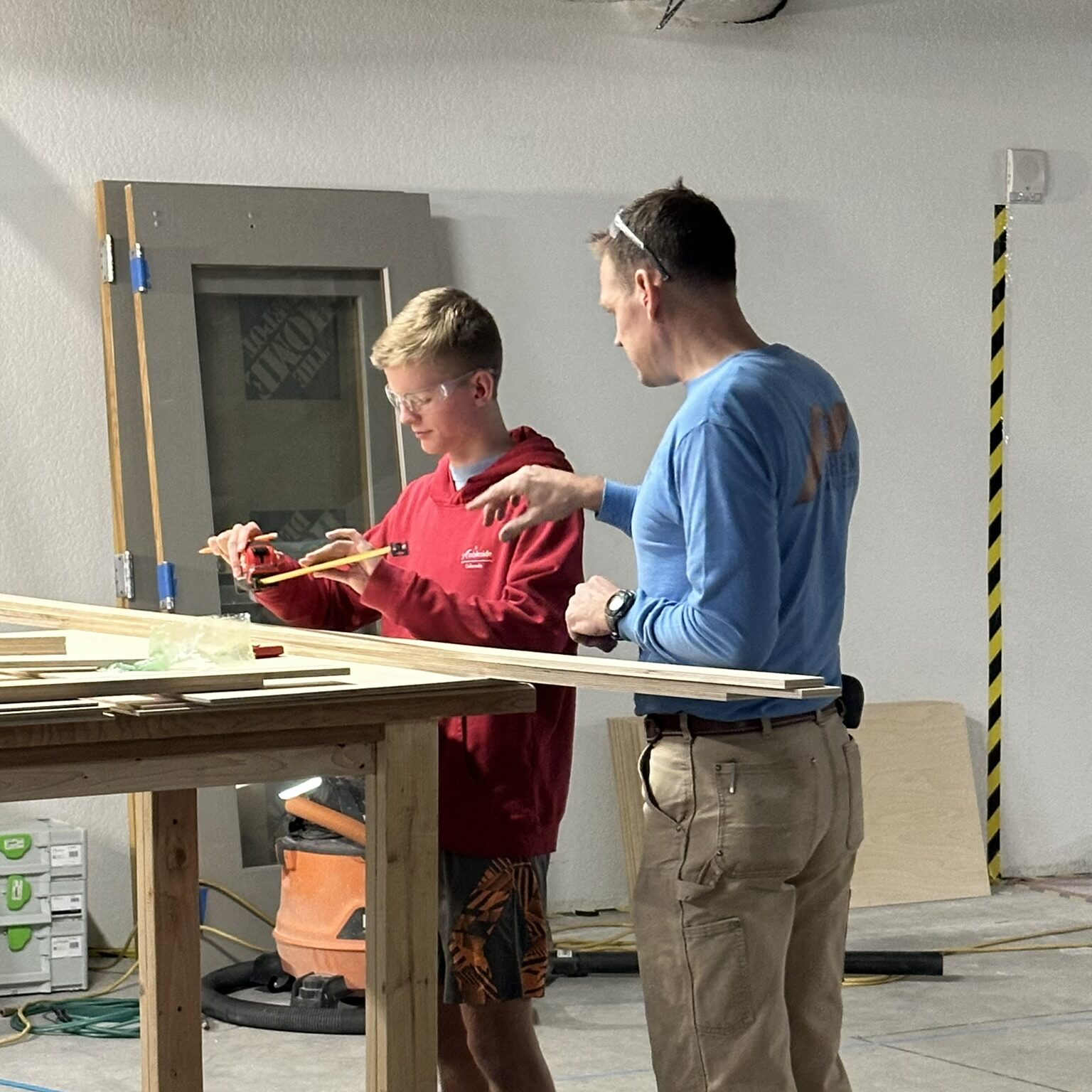
To disciple is to lead another in one’s way of life, and the only way of life one can impart is that which one lives. Only a kind adult can lead a child to kindness. Only a humble adult can lead a child to humility. Only an adult who delights in learning can lead a child to delight in learning. Only an adult who manages emotional distress well can lead a child into managing emotional distress well.
We can only give what we possess. We can only impart who we are. Children are shaped far more by what they experience in us than by the claims we make.
Furthermore, children will only follow those who are glad to be with them. Children experience those who are not glad to be with them as being unreliable and unsafe. And children will not follow those whom they have experienced to be unreliable and unsafe. They may submit, but they will never follow. (Fear can be a powerful means of control.)
We only follow those who build joy bonds with us, those who are with us and for us, both when we are strong and when we are weak.
The Potency of Ideas
Children live by what they know, both by what they have witnessed and the ideas they have assimilated. Ideas are not to be thought of as merely a set of propositions. One can affirm a proposition as true without assimilating the guiding idea. To have an idea is to apprehend a set of relationships.
Such assimilated ideas guide us in determining our behavior and decisions. I am tired and irritable. Is it like me and my people to “take it out” on others? Or is it like me and my people to quiet myself, take space for myself, and be kind? Ideas that have been assimilated are potent. Long before modern talk of neuroplasticity, Charlotte Mason claimed that the brain “grows to the modes of thought in which it is habitually exercised.”3
It is important to note that, as a rule, children do not assimilate ideas offered by lecture. They assimilate ideas sown lightly, intentionally, inspirationally as they walk daily with those to whom they joyfully belong.
The Training of Habit
If every picking up of a fork, every turning a wheel, every opening a door, or every smile required a conscious decision to act, life would be unmanageable. To relieve us, habits govern 99% of every person’s life. Habits are the dispositions by which we live. They are the rails upon which the locomotive of life runs.
Thus, there is no greater responsibility of parent and teacher than to “consider well the tracks over which the child should travel with profit and pleasure; and, along these tracks, to lay down lines so invitingly smooth and easy that the little traveler is going upon them at full speed without stopping to consider whether or no he chooses to go that way.”4
At Ambleside
At Ambleside, we are not content to leave ourselves or our students to the “defects of their qualities.” We are convinced that the Father has a beautiful inheritance for each of us. And to enter that inheritance, we must become the persons He intends us to be. Such a becoming requires discipleship.
Bill St Cyr
Director of Training, Co-Founder
Ambleside Schools International
1 Charlotte Mason, Parents and Children, (Wheaton, IL: Tyndale House Publishers, Inc., 1989) 84.
2 Ibid. 23.
3 Charlotte Mason, Home Education, (Wheaton, IL: Tyndale House Publishers, Inc., 1989) 116.
4 Ibid. 110.